A conversation with Najoh Tita-Reid, Logitech’s global CMO
She sat down with Marketing Brew to discuss the brand’s work with influencers.
Elena Olivo
Loading story content…
She sat down with Marketing Brew to discuss the brand’s work with influencers.
Elena Olivo
Influencers: Love ’em or hate ’em, they’re in your feed, they’ve got their own “airline,” and they’re collectively raking in billions of dollars from brands.
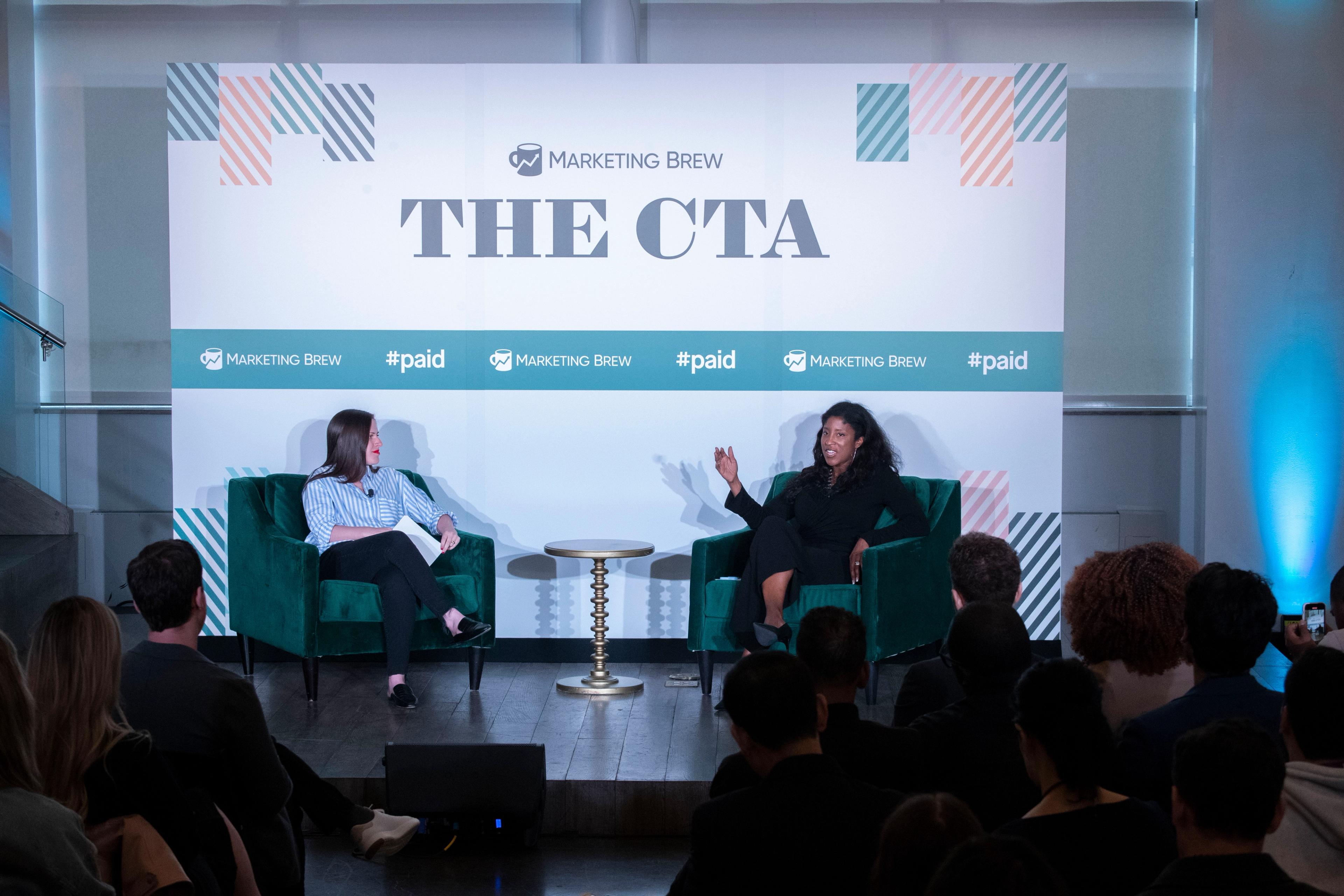
“Influencer marketing is not a fad, and it’s not something that’s coming. It’s here and it’s here to stay,” Logitech Global CMO Najoh Tita-Reid told Marketing Brew’s Phoebe Bain at this month’s CTA event, where she shared everything from how the company goes about compensating influencers to why it chose Lil Nas X to star in its first Super Bowl commercial.
Watch the full conversation here, or check out some of the highlights below.
Creators, influencers, celebrities: Are they all the same, one in the same, or is each something different? Tita-Reid shared how she defines each and how they play different roles when it comes to influencer marketing.
Later, she explained that while celebrities and bigger influencers can help with things like brand awareness, influencers can help with lower-funnel goals. “I have to make sure in all my marketing we have a mix of people that make you aware and people that have a smaller circle, but are highly influential and convert,” she said.
Last year, Logitech aired its first Super Bowl ad, which starred Lil Nas X as well as 10 influencers and creators. Tita-Reid shared why the company chose Lil Nas X to front the campaign.
“He represented an amazing success story of a creator who started in their garage and worked their way up,” she explained. “He actually was using the type of equipment that we have to be able to fulfill his passion. Our entire mantra and our reason for being at Logitech is to help creators and all people pursue their passion, and we hope that we give you the tools to do that. He was a manifestation of that.”
Platforms like FYPM and Clara are trying to bring pay transparency (and equity) to a space that traditionally hasn’t had much. At Logitech, Tita-Reid said she tries to view influencers as their own “form of media,” a view which she hopes will lead to fair compensation.
“I try to pay for the value that [influencers] have, but we all know that this world is a little bit of the wild, wild West,” she said. “I try to think about this world the way I think about media to the best of our ability. We’re trying to get an art down to a science, which is going to take a while.”
She said compensation for influencers as it stands today is “not fair at all, because everyone is paying everybody just depending on what you want and the timing that you need them, how often you need them…The sliding scale is huge.”