Olipop takes on Big Soda in first major campaign
Its ads target sports fans and pop drinkers.
Olipop
Its ads target sports fans and pop drinkers.
Olipop
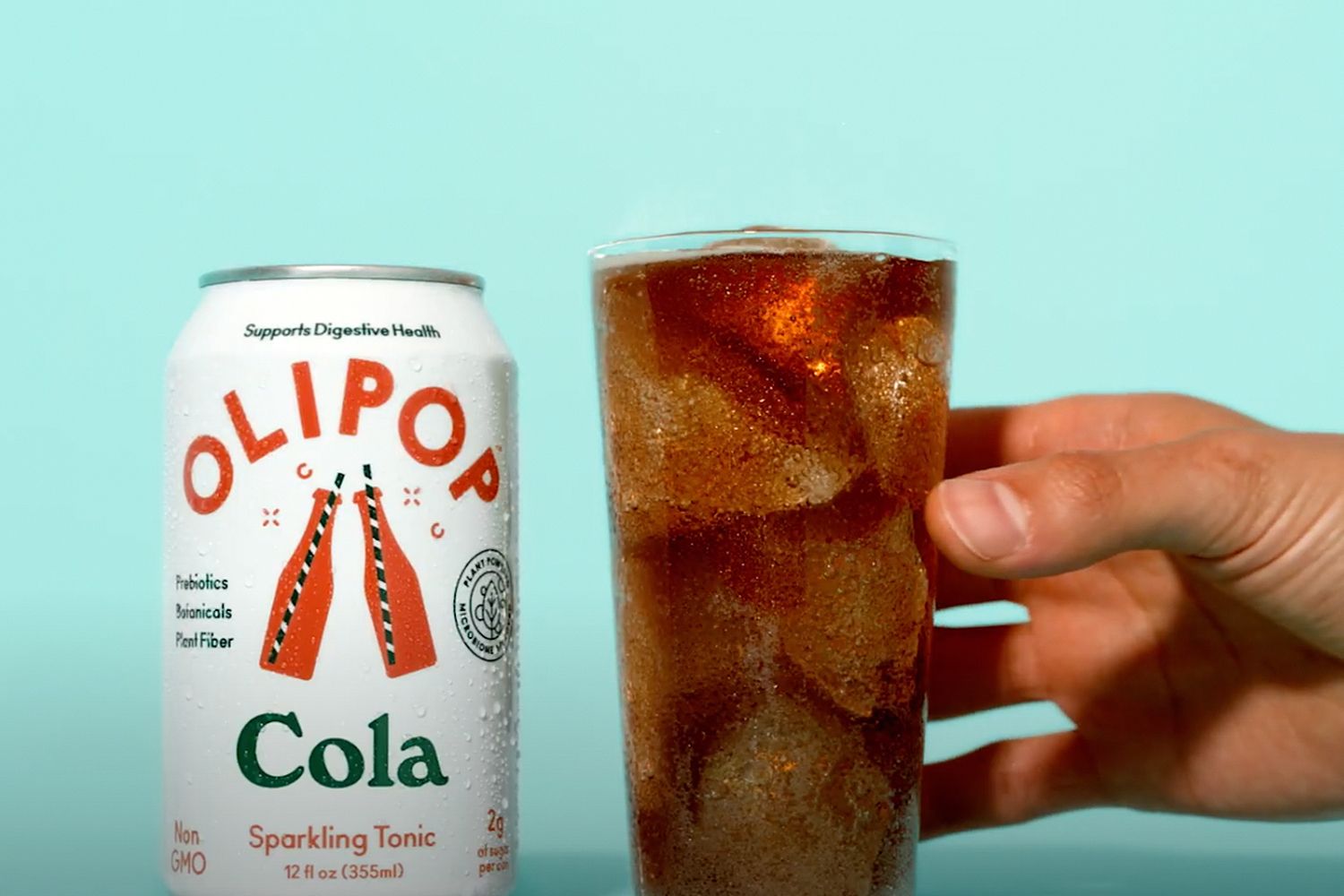
It’s brown, it’s sweet, and there’s a chorus of fizz when it’s poured over ice. It is neither Coke nor kombucha. It’s Olipop, a stevia-sweetened prebiotic-laden drink that hopes to squirm its way into the crowded carbonated beverage category, finding an opportunity between sickeningly sweet soda pop and tart, vinegary probiotic-rich drinks.
Coming in seven flavors like Classic Root Beer, Vintage Cola, and Cherry Vanilla, Olipop is running its first major campaign today across streaming platforms such as Hulu, Roku, Spotify, ESPN, and Amazon Fire TV, to introduce—specifically—sports fans and cola drinkers to a brand that calls itself “a new kind of soda.”
The campaign showcases two spots:
“These are brands that understand the categories they’re in,” he told us. Otherwise, “it’s a big miss for the natural products industry so far.”
Olipop, which can promo in retailers for $4 for two cans, aims to find space between $1 a pop sodas and pricier kombuchas.
Selling soda
The campaign will run for the next six months, marking the brand’s most expensive ad buy yet. And while Olipop may have all the design aesthetic of any DTC brand you’d find on Instagram, roughly 70% of the brand’s revenue comes from retailers. It’s already available in about 5,500 locations, including Whole Foods, a third of Krogers, and 170 Targets, as well as regional groceries.
Lester declined to provide any sales figures other than percentage increases, but he said revenue grew 10x between 2019 and 2020. Still, Olipop isn’t profitable. And even though the ad pokes fun at Pepsi, Olipop could very well be scooped up and added to the soda giant’s portfolio: In 2016, PepsiCo bought kombucha brand KeVita, and two years later, Coca-Cola bought Australian ’bucha brand Mojo.
“It wouldn't be crazy to assume an acquisition at some stage, given the challenges with distribution,” said Lester. “For us right now, we're focused on profitability margin and continuing to move toward a self-sustaining business.”