Is zero-party data a real thing?
It’s up for debate. We break it down.
Francis Scialabba
It’s up for debate. We break it down.
Francis Scialabba
There’s first-party data, second-party data, and, of course, there’s the hot-dog meat of data, third-party data. Apparently, a fourth type of data just dropped 👀.
Called zero-party data, its existence was recently debated on Twitter—is it real? Is it a marketing buzzword? How the heck is it any different than first-party data? Is it…loyalty data? Answers ranged from “It’s not a real thing and I will die on this hill,” to “Yes, it’s a ‘thing.’”
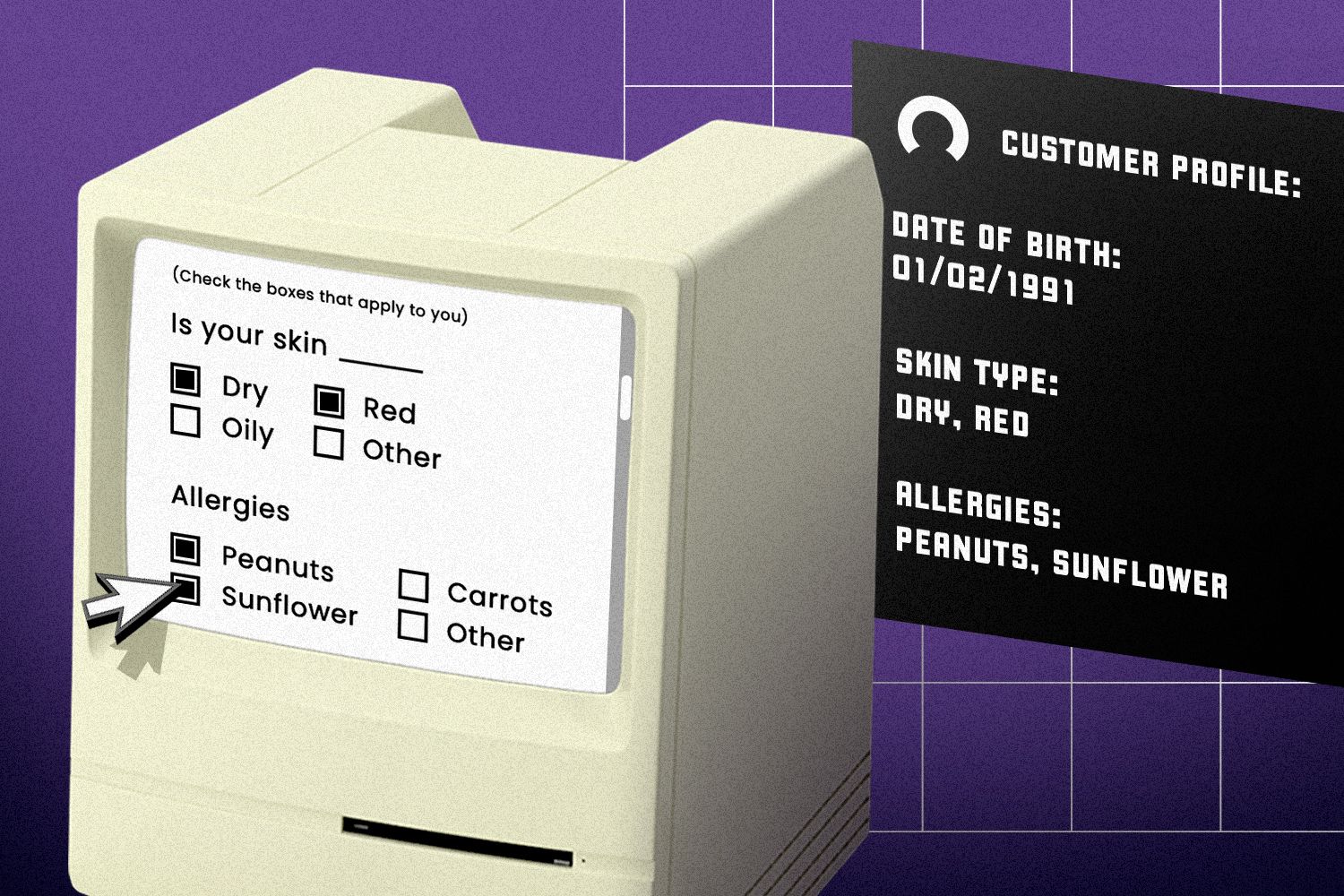
So, what the heck is it? Those who think it’s real say zero-party data is information a person volunteers to a brand in exchange for something that might improve their experience or interactions with a company. Forrester invented the term in 2018, but it’s entered the digital zeitgeist as conversations about data privacy heat up.
Some examples:
Some marketers call it zero-party data, while others call it customer-first data. Tomato, tomato.
On the other hand, zero-party data has “explicit meaning and requires no inferences,” argues Wendell Lansford, a cofounder of Wyng, a company that helps brands collect zero-party data.
“[With first-party data] you don’t know all the data that’s being collected about you…because it’s happening behind the scenes,” he said. That “behind the scenes” data is often things like items added to or removed from a shopping cart, the amount of time users spend on a site, and what users search for on that site.
“Just because you took an action…doesn’t mean you want a brand to have that information and use it to make recommendations,” Lansford explained. “Just because you listened to a song doesn’t necessarily mean you liked it.”
Like so much in the advertising industry, the rise of ZPD comes back to the death of third-party cookies. Without them, it will become more difficult for advertisers to track people across multiple websites and target them based on (sometimes inaccurate) information.
It’s even more relevant for brands without much of a digital presence, explained Stephanie Liu, an analyst at Forrester, calling ZPD a “marketing construct.”
“There’s a huge interest in this from the CPG world…manufacturers who have traditionally been disintermediated are trying to understand their customers directly,” she said. “You need to make the value exchange really clear to motivate customers to share their data.”
In practice: Zero-party data is often gathered via product-finder quizzes and similar widgets on e-commerce websites.
Wyng says he has made this kind of tool for clients like General Mills, Unilever, and Church & Dwight.
Another company, Octane.AI, makes these tools for merchants on Shopify and has used the answers gleaned from these widgets to inform email marketing campaigns, sending audiences messages tailored to the information they’ve shared with a retailer.
Its CEO, Matt Schlicht, is squishier on the definition of ZPD, noting that it’s mostly used for communication purposes within the industry. “Over a long enough timeline, do I think that there’s a chance that the term zero-party data goes away, and people just refer to it as first-party data? I think that is potentially very likely. It’s a lot easier to say,” he told Marketing Brew.
As the saying goes: If it walks like first-party data, if it quacks like first-party data, it’s probably first-party data. Anyway, can we interest you in 0.5 data?