This year’s ANA Masters of Marketing conference, recapped
Marketers from Lowe’s, McDonald’s, the NFL, and Unilever spoke at the hybrid event—here’s what they had to say.
ANA
Loading story content…
Marketers from Lowe’s, McDonald’s, the NFL, and Unilever spoke at the hybrid event—here’s what they had to say.
ANA
Each October, thousands of marketers flock to Orlando for the Masters of Marketing conference. Put on by the Association of National Advertisers, the conference is three days of buffet food, subpar coffee, hobnobbing, and performances from the likes of the Backstreet Boys (seriously). Oh, and lots of CMO presentations.
At any rate, Marketing Brew watched the conference from the comfort of our apartments to bring you some of the highlights, all rounded up below.
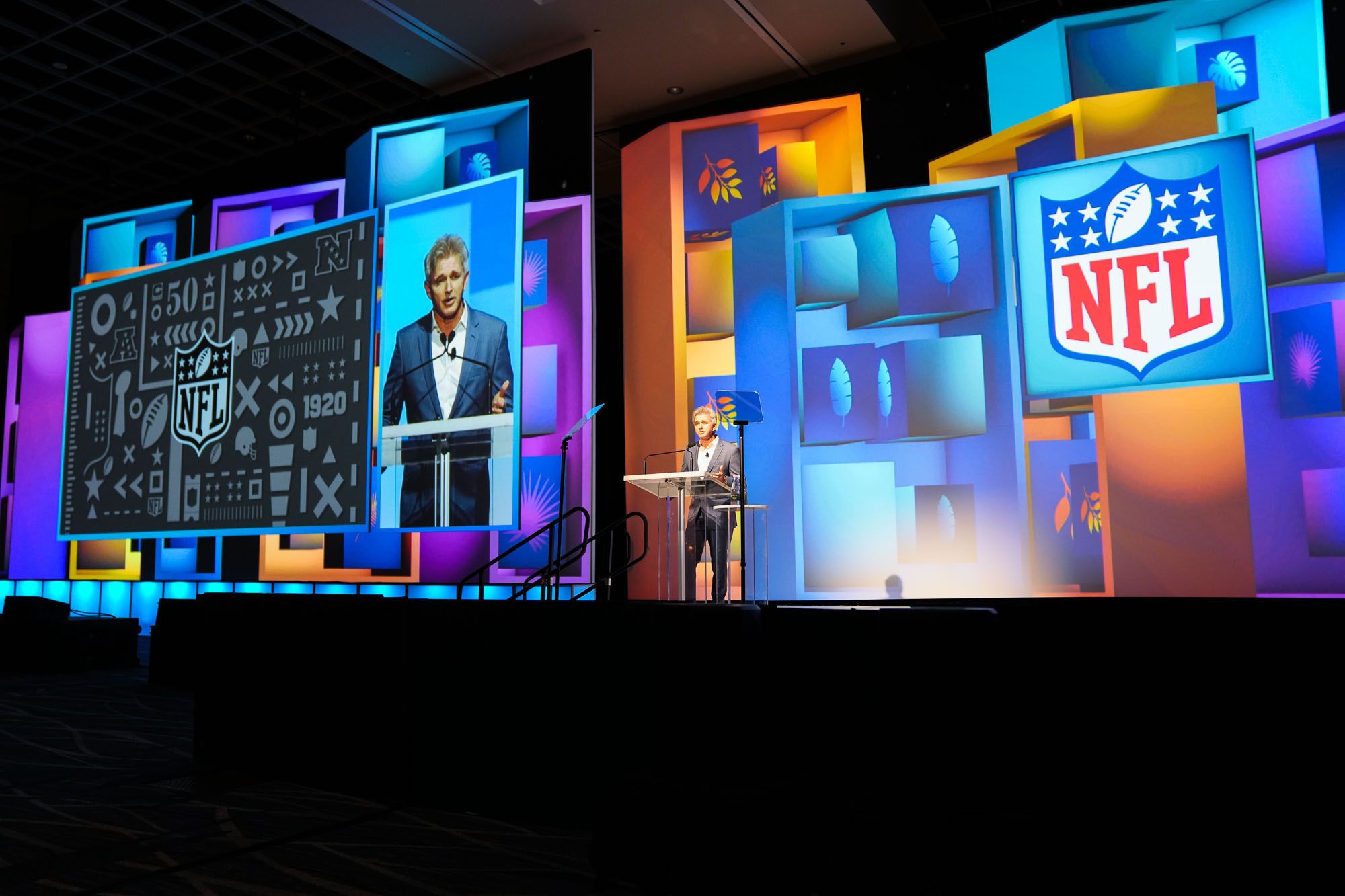
The NFL is gay, the NFL is transgender, the NFL is American. It’s ad copy that would have seemed unthinkable 20 years ago. But now, it’s a message the league isn’t afraid to hide from, explained Tim Ellis, the league’s chief marketing officer, during his presentation.
More recently, the NFL has promoted talking about depression and anxiety among its players, and has seen the first openly gay player come out of the closet to wide support from his teammates and Goodell—as well as the league placing social justice messaging on the field.
“I wanted our players to be relatable, which meant removing that proverbial helmet and showcasing a more human face for the league, a league that’s willing to have tough conversations, authentically lean into youth culture, and stand behind the players and what matters most to them,” said Ellis.
Bonus quote: “If we don’t have the NFL this fall, this country is in for a whole lot of shit,” a quote Ellis attributed to former Pepsi CEO Indra Nooyi in the spring of 2020.
Marisa Thalberg, EVP and chief brand and marketing officer at Lowe’s, said a main challenge she has faced since joining the retailer in February 2020 has been differentiating it from its rival Home Depot.
Ultimately, the company’s goal is to sell products, which it can theoretically do by pouring money into performance marketing, but Thalberg said that felt like a trap.
“If we just do that, we’re in a race to the bottom of one Google search away for [the] cheapest price,” Thalberg said. “I want people to say, ‘I want to get those tools,’ but I want them to say, ‘I want to get those tools at Lowe’s.’”
To that end, Thalberg said he set out to reframe the Lowe’s brand as a destination. For example:
The latter was an effort to remind people that while Lowe’s is a hardware store, style-minded consumers can also visit it for housewares.
“People knew they could come to us for a hammer and nails,” Thalberg said. “But did they know that they could come to us and get a gorgeous, fluffy pouf?”
McDonald’s SVP & Chief Marketing & Digital Customer Experience Officer Morgan Flatley shared the brand’s vulnerability during her talk, explaining that, just a few years ago, it was disconnected from its biggest fans (as well as younger consumers) and focusing too much on the haters.
Flatley outlined a few key tactics that propelled McDonald’s brand from stale and disconnected, helping it become more relevant. The not-so-secret thread through the presentation was the importance of celebrity influence.
Unilever’s Esi Eggleston Bracey, EVP and COO of beauty and personal care in North America, had a pretty simple message for attendees: A little positivity might be able to give your brand the boost it needs.
Bracey, who joined the company in 2018, has spearheaded some of the company’s purpose-driven efforts, like its “inclusive” deodorant that rolled out earlier this year. But she’s also helped inject what she calls “positive propositions” into some of Unilever’s brands.
She also highlighted Find Your Happy Place, a line of candle and body-care products Unilever recently developed with Walmart. “You can feel the positivity in the name,” she said.
Results: Bracey claimed these propositions are “working in the marketplace” and leading to “increases in household penetration,” but didn’t share any other details.